L. Kifisias 193 & Iereos Doysi 24,
15124, Maroysi, Athens, Greece
15124, Maroysi, Athens, Greece

The "Big Apple", the bustling metropolis and worldwide centrre of commerce, finance, culture, fashion and entertainment, is a wonderland for Museum hunters -, shoppacholics and show-holics... Take a walk through Times Square, catch a Broadway show, visit some of the 150 museums,- Metropolitan Museum, MoMA (Μuseum of Modern Art), Guggenheim, American Museum of Natural History- and see its different facets through an intricate patchwork of neighborhoods. Walk along Lower Manhattan, Chinatown, trendy SoHo, Greenwich Village, Little Italy... See the Statue of Liberty, climb up the Empire State Building and Ground Zero and then, relax at Central Park, one of the most famous sightseeing spots in New York, which covers 341 hectares of paths, ponds, artificial lakes and green space within the asphalt jungle.
Madeira is located in the north Atlantic Ocean, 520 km from the African coast and 1.000 km from the European continent. Today, it is a popular year-round resort, noted for its wine, flowers, landscapes and embroidery artisans. Madeira's capital Funchal, on the island's south coast, rises straight up from the sea and enchants visitors, with its red roofs and hibiscus easing gently down the lower slopes of Pico do Arieiro to the ocean. Time given, take the cable car toMonte Palace, in a 15-minute ride up and over the old town of Funchal and the Ribeira de Joao Gomes valley. When in town, wander along the Old centre, with its port and promenade, quaint and narrow winding streets, shops, cafés, bars and restaurants and view "Worker's Market", the 15th-century cathedral, the Theatre, the Town Hall and the waterfront.
Cadiz is a city and port in southwestern Spain, the oldest continuously-inhabited city in Spain and one of the oldest in southwestern Europe. During the Age of Exploration, the city experienced a renaissance. Christopher Columbus sailed from Cádiz on his second and fourth voyages and the city later became the home port of the Spanish treasure fleet.
Cadiz is the gateway to Seville, capital of Andalucia, which lies on the mighty Guadalquivir at a distance of 120 kms. Taking a tour to Seville, will give you a change to marvel the Alcazar, a grand 14th Century Moorish palace, the Seville Cathedral and the Archivo de Indias, all UNESCO World Heritage sites, built in the Mudejar style, and also, to walk the narrow lanes of the Jewish
Quarter, the expanse of the Plaza de Espana, or the halls of the Museo de Bellas Artes.
Gibraltar is an amazing co-mingling of past, present and future.The Rock of Gibraltar was considerred by the Ancient Greeks as the pillars of Hercules, marking the end of the world. It is at the Top of the Rock where you begin to understand and appreciate Gibraltar’s strategic geographical location and the important role it has played throughout history. The journey to the top of the Rock rewards you with a truly breathtaking view. From a height of 426m you will see the African coastline, where the waters of the Atlantic meet the Mediterranean, Spain’s Costa del Sol and a panoramic view of the City far below, the quays, marinas and bays. Stand on top of the Rock of Gibraltar and you feel as if you were on top of the world.
Motril is a beautiful town on the Mediterranean coast in the province of Granada, Spain. It has been a historic gateway for many civilizations. Motril is an ideal place for all kinds of water sports. Visit can enjoy many attractions of cultural interest

Barcelona is one of the world's greatest treasures, a global capital of commerce, fashion, culture and sunshine. Cruise visitors should start with a walk down Las Ramblas, the glorious tree-shaded thoroughfare at the heart of the city, enjoy a dive in the wonderful beaches nearby, but, most of all, see what visionary architect Antoni Gaudi wrought. Seven of his creations have been honored as UNESCO World Heritage Sites, including La Sagrada Familia, the Park Guell and Casa Mila. Time provided, you can also visit the former Olympic Ring on the hill of Montjuic, home to world-class parks, fountains and museums. Barcelona, which nurtured such artistic giants as Picasso, Dali, Miro and Casals, is definitely a traveler's paradise.
Located on the south east coast of France on the Mediterranean Sea, Nice has a hot-summer Mediterranean climate. The blue waters of the Cote d'Azur and the palm-lined promenade make a striking background for this elegant city.

Livorno, Tuscany's second-largest city, is the maritime gateway to the Tuscany region and its two most known cities, Florence (to the west) and Pisa (to the north). Among Livorno's main attractions are the Cisternone, an impressive neoclassical building on Viale Giosue Carducci, designed like a Roman bath, the main city square Piazza della Repubblica with Fortezza Nuova (the castle dating back to around 1576) in the background and a number of interesting shops in the city centre that visitors can explore. Florence, the cradle of the Renaissance, is home to the Duomo, the Uffizi and the Ponte Vecchio. Pisa contains a host of beautiful cathedrals, palaces and bridges over the Arno River, as well as its glorious Leaning Tower, monument to faulty engineering.
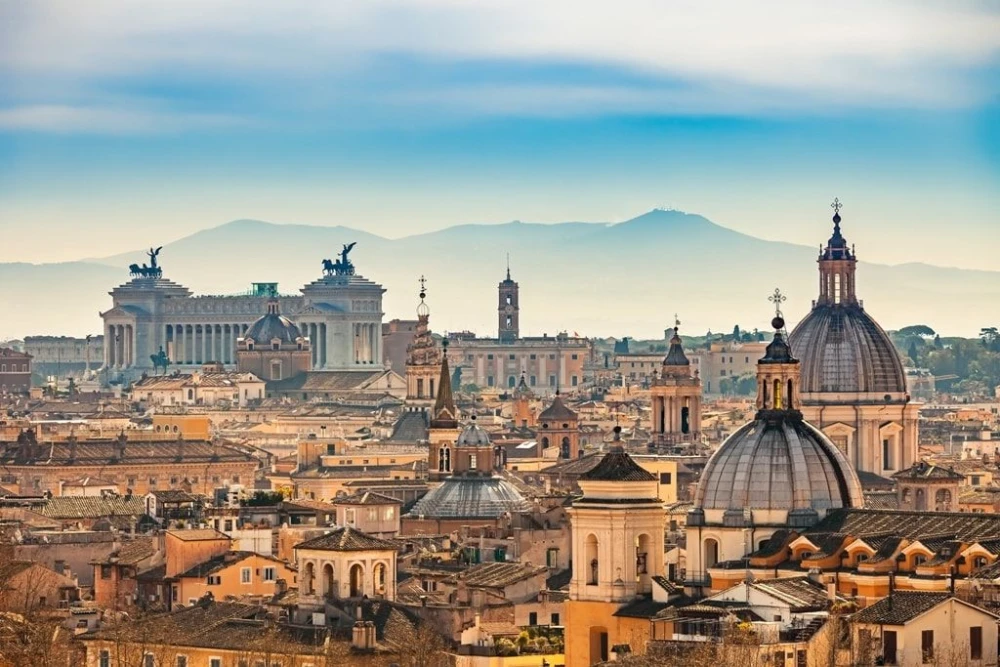
Our gateway to the Eternal City, Civitavecchia has served as Rome's seaport since the 13th century, boasting a long and venerable history. Its location near the modern city, made it a perfect vacation resort for emperor Trajan, who built a pleasure villa. while Bernini and Michelangelo designed the harbor fortifications. Yet the Eternal City, the ancient capital of the Western World and the center of Christianity for nearly 2.000 years, is our main reason to be here. YYou can visit the ruins of the Forum and the Colosseum, throw a coin in Fontana di Trevi to make sure you return to Rome one day, take a photo in front of the Vatican, view the splendors of the Sistine Chapel or climb the Spanish Steps, once the heart of Rome's Bohemian Quarter and enjoy a delicious gelato, in the glamorous area.

Split, built under the orders of the Roman emperor Diocletian, who lived out his last days after abdicating in AD 305, is located between Venice and the Ionian Islands, on the Dalmatian coast and is one of the most important ports of Croatia. Today, the remarkable residence of the Roman Emperor, listed as a UNESCO World Heritage Site, awaits your discovery. The white limestone palace, part luxurious villa, part military camp, is enclosed by imposing walls and connected by roads linking the eastern Silver Gate with the Iron Gate to the west. Within its premices, you can see an octagonal domed mausoleum, temples and a monumental court accessing the imperial apartments.
Ravenna, the former capital of the Western Roman Empire (402- 476) in Emilia Romana region, is famed for its mosaics which depict a rich cultural heritage. Eight early Christian monuments of Ravenna are inscribed on the World Heritage List, among which, the Basilica of Sant'Apollinare in Classe (549), the Mausoleum of Galla Placidia (c. 430), the Basilica of Sant'Apollinare Nuovo (c. 500) and the Mausoleum of Theoderic (520), the Archiepiscopal Chapel (c. 500) and the Baptistry of Neon (c. 430). Ravenna is a port town and cruise destination which serves as a gateway to the Apenine republic of San Marino, the oldest surviving sovereign state in the world and one of the smallest states in the world.