L. Kifisias 193 & Iereos Doysi 24,
15124, Maroysi, Athens, Greece
15124, Maroysi, Athens, Greece


Marseille is the largest port on the Mediterranean, France's second largest city and a virtual melting pot of peoples and cultures. It is a unique city with a feel and culture all its own. It is also a place of striking contrasts, from the fishing boats of the picturesque Vieux Port to the modern Canebiere. Dominating the harbor is the infamous Chateau d'If, the rocky prison from which Alexandre Dumas' "Count of Monte Cristo" escaped. If you have time, explore the countryside around Arles and Avignon, immortalized in the canvases of Van Gogh, Cezanne, Matisse and Picasso, try the renowned bouillabaisse or tour the lovely towns and vineyards of Provence.

Savona is a seaport in the northern Italian region of Liguria, on the Mediterranean Sea. Savona is the home port of Costa Cruises for the cruises to East and West Mediterranean, the Canary Islands etc. It has a large, modern cruise terminal, the Palacroisière, which provides all the facilities for its passengers. Large cruise ships dock next to the marina, which is located in the historic center of the city. Most sights are within walking distance of your cruise ship, through a pedestrian bridge near the marina. One of the most important inhabitants of Savona was the navigator Christopher Columbus, whose house, a cottage, is situated in the Savona hills. Highlights are the Cattedrale di Santa Maria (17th c.), located in the heart of the old town, the Priamar palace (16th c.), a reinforced fort just outside the port, the symbol of the town Brandale tower (12th c.), and the main tower (Tower Quarda) of the city Leon Pancaldo tower (14th c.) at the entrance of the old harbor. On the old markets, you will find souvenirs and local products.
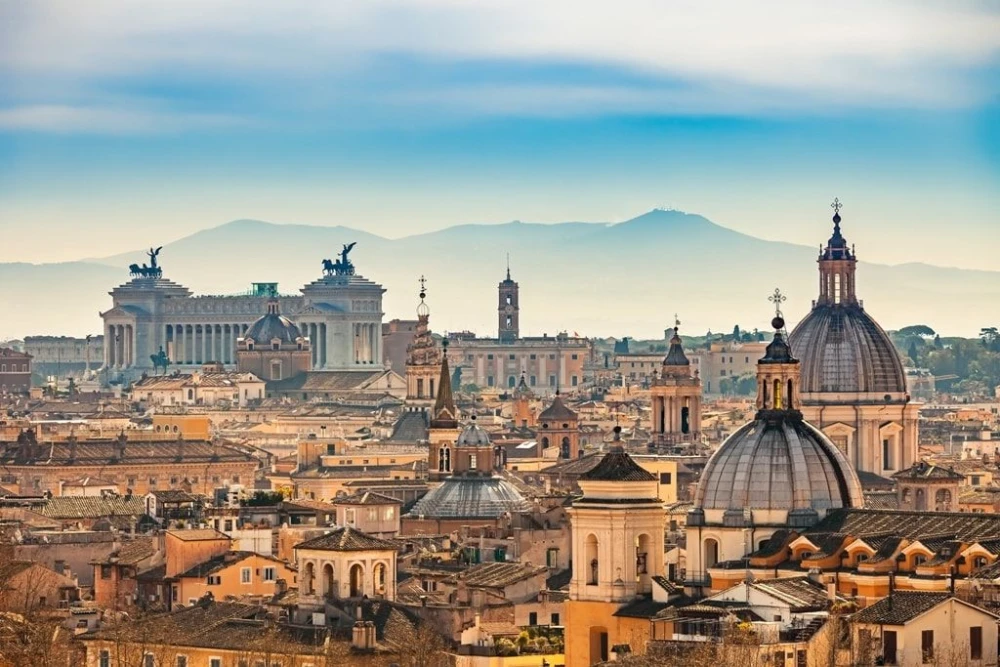
Our gateway to the Eternal City, Civitavecchia has served as Rome's seaport since the 13th century, boasting a long and venerable history. Its location near the modern city, made it a perfect vacation resort for emperor Trajan, who built a pleasure villa. while Bernini and Michelangelo designed the harbor fortifications. Yet the Eternal City, the ancient capital of the Western World and the center of Christianity for nearly 2.000 years, is our main reason to be here. YYou can visit the ruins of the Forum and the Colosseum, throw a coin in Fontana di Trevi to make sure you return to Rome one day, take a photo in front of the Vatican, view the splendors of the Sistine Chapel or climb the Spanish Steps, once the heart of Rome's Bohemian Quarter and enjoy a delicious gelato, in the glamorous area.

Founded by Greek colonists in the 8th century BC, Messina is the 3rd largest city on the island of Sicily and the 13th largest city in Italy. The town is amphitheatrically built on top of a hill overlooking the sea and offers great views. While you wander around its alleys, you will see the Cathedral (12th century) and notice especially the Chapel of the Sacrament (late 16th century), with scenic decorations and 14th century mosaics and a bell tower which holds one of the largest astronomical clocks in the world. Among other main attractions are the Palazzo Calapaj, an example of 18th century Messinese architecture, San Ranieri lighthouse (1555), Galleria d'Arte Contemporanea di Messina, hosting notable paintings by Caravaggio and Antonello da Messina, the Fountain of Orion, located next to the Cathedral and the Fountain of Neptune, looking towards the harbour, both built by Giovanni Angelo Montorsoli in 1547 and 1557 respectivelly. Messina is the gateway to Taormina and its views of snowcapped Mt. Etna.

Piraeus port is the gateway to Athens center. Don't miss the Parthenon, the temple to Athena which looms over Athens from its perch atop the Acropolis, an eternal icon of art and civilization. Completed in 438 B.C., the temple still astounds as the flowering of Greek art and architecture. When you come down off the hill, don't miss a visit to the Ancient Agora, Syntagma Square, the Acropolis Museum and the city's historic centre, around Plaka. Ideally, sit and relax at a cafe on the foot of the hill, sample some Greek souvlaki or a frappe, take a glance back up the hill from time to time and give the goddess her due.

Ηere in the island’s capital and largest city, you can wander among the squares and fountains or gaze out over the azure blue waters of the Cretan Sea, as you enjoy fresh seafood in a local taverna on the promenade. Don't miss the Palace of Knossos, the largest of the preserved Minoan palatial centres, situated not more than 5 kms from Heraklion. It is the most visited archaeological site in Crete. The palace was the seat of the legendary King Minos and has been associated with famous Greek myths, like that of Daedalus and Icarus, the Labyrinth and the Minotaur. The incredible complex houses a warren of rooms decorated with columns and frescoes

Santorini is essentially what remains of an enormous volcanic explosion dated back 3,600 years (between 1627- 1600 BC) and which created the current geological caldera: a giant central lagoon, more or less rectangular, measuring about 12 by 7 km. The effect is still explosive: 300-m-high steep cliffs on three sides rise from sea level, cubic white houses surrounded by pink bougainvilleas glow in the Aegean sun. The wild beauty, the fascinating Caldera, the gold sunset, of the Number 1 destination in Greece will steal your heart away!

Katakolon Port occupies the north-west part of the Peloponnese. To the west it is washed by the Ionian Sea. It is the current harbor of the regions capital city Pyrgos and serves as the gateway to the site of ancient Olympia, one of the most important archaeological sites in the world and birthplace of the Olympic Games. Visitors can see the remains of the original Olympic stadium, the Bouleuterion and the Temple of Zeus, enjoy free time in modern Olympiato shop or visit the Museum of the Olympic Games.

Palma is a busy commercial and cultural center, capital city of the autonomous community of the Balearic Islands of Spain. Situated on the south coast of the island on the Bay of Palma, it became a tourist destination in the 1950s and till today it is considered as one of Europe’s major holiday destinations.The historic centre is the oldest part of the city and a refreshing area for a stroll at the narrow and shady streets, which will give you a chance to peek in at a number of private courtyards. The city flourished during the 19th century and today, it mixes perfectly, the modern hotel chains and flashy shops with the old architecture in the Old Town. A walk along the narrow streets will reveal the restored 13-th century cathedral standing proud in the center of town. Among Palma's lovely sights are the Gothic-style Bellver Castle, the Almudaina Palace, once home to Mallorcan kings, the Arab bath building, the only building dating to the Arab settlement, Plaça del Mercat and interesting art nouveau buildings.

Barcelona is one of the world's greatest treasures, a global capital of commerce, fashion, culture and sunshine. Cruise visitors should start with a walk down Las Ramblas, the glorious tree-shaded thoroughfare at the heart of the city, enjoy a dive in the wonderful beaches nearby, but, most of all, see what visionary architect Antoni Gaudi wrought. Seven of his creations have been honored as UNESCO World Heritage Sites, including La Sagrada Familia, the Park Guell and Casa Mila. Time provided, you can also visit the former Olympic Ring on the hill of Montjuic, home to world-class parks, fountains and museums. Barcelona, which nurtured such artistic giants as Picasso, Dali, Miro and Casals, is definitely a traveler's paradise.
Marseille is the largest port on the Mediterranean, France's second largest city and a virtual melting pot of peoples and cultures. It is a unique city with a feel and culture all its own. It is also a place of striking contrasts, from the fishing boats of the picturesque Vieux Port to the modern Canebiere. Dominating the harbor is the infamous Chateau d'If, the rocky prison from which Alexandre Dumas' "Count of Monte Cristo" escaped. If you have time, explore the countryside around Arles and Avignon, immortalized in the canvases of Van Gogh, Cezanne, Matisse and Picasso, try the renowned bouillabaisse or tour the lovely towns and vineyards of Provence.