L. Kifisias 193 & Iereos Doysi 24,
15124, Maroysi, Athens, Greece
15124, Maroysi, Athens, Greece

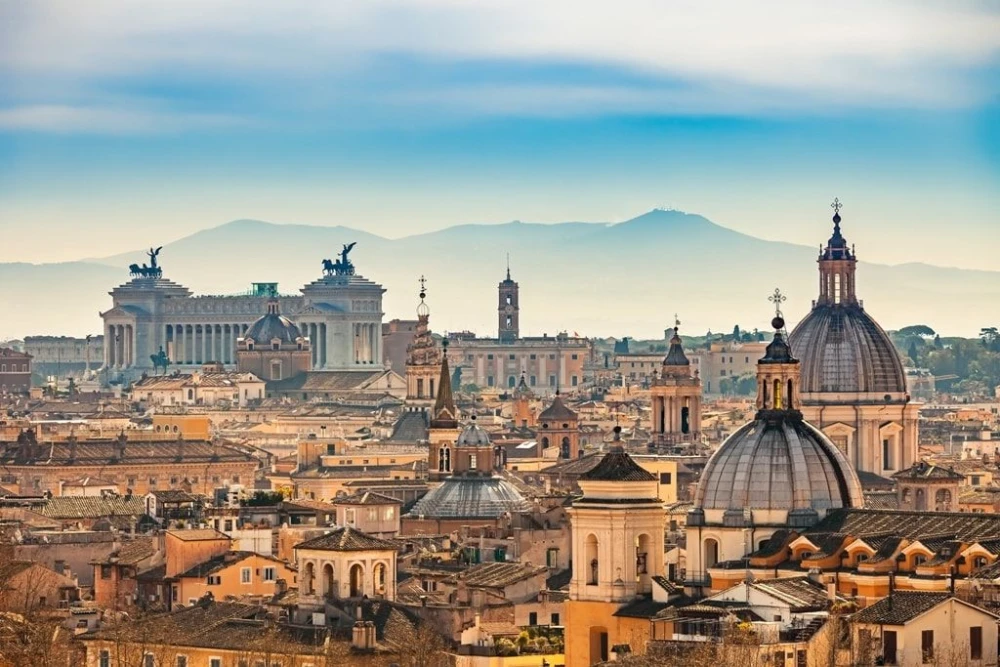
Our gateway to the Eternal City, Civitavecchia has served as Rome's seaport since the 13th century, boasting a long and venerable history. Its location near the modern city, made it a perfect vacation resort for emperor Trajan, who built a pleasure villa. while Bernini and Michelangelo designed the harbor fortifications. Yet the Eternal City, the ancient capital of the Western World and the center of Christianity for nearly 2.000 years, is our main reason to be here. YYou can visit the ruins of the Forum and the Colosseum, throw a coin in Fontana di Trevi to make sure you return to Rome one day, take a photo in front of the Vatican, view the splendors of the Sistine Chapel or climb the Spanish Steps, once the heart of Rome's Bohemian Quarter and enjoy a delicious gelato, in the glamorous area.
Since its founding as a Roman colony in 138 B.C., the Visigoths, the Moors, the Catalan and Aragonese and the modern tomato-throwers have thrived on the shores of the Mediterranean at the Gulf of Valencia. Valencia is a mix of the old and the new. The historic past is depicted in the stone geometry of the Valencia Cathedral, the mediaeval gates of the Serrano and Quart towers, or the Tribunal de las Aguas (Water Court) and one of the most iconic examples of Gothic architecture in Europe, the Lonja de la Seda, declared an Intangible Cultural Heritage site by UNESCO. The new facet is embodied in the arching white steel of the futuristic City of Arts and Sciences, designed by Valencian architect Santiago Calatrava.

Today we are visiting Genoa, the capital of the Province of Genoa and of the region of Liguria, a powerful commercial center seaport and city-state. It was the birthplace of the great adventurer Christopher Columbus and its maritime roots have fostered a dialect that has absorbed elements of Neapolitan, Calabrese and Portuguese over the centuries. Genoa's harbor is a bustling swarm of activity, hosting a museum and an aquarium and has a magnificent medieval flair, ideal for a nice stroll. This port is our launching point for the sprawling metropolis of Milan.

Marseille is the largest port on the Mediterranean, France's second largest city and a virtual melting pot of peoples and cultures. It is a unique city with a feel and culture all its own. It is also a place of striking contrasts, from the fishing boats of the picturesque Vieux Port to the modern Canebiere. Dominating the harbor is the infamous Chateau d'If, the rocky prison from which Alexandre Dumas' "Count of Monte Cristo" escaped. If you have time, explore the countryside around Arles and Avignon, immortalized in the canvases of Van Gogh, Cezanne, Matisse and Picasso, try the renowned bouillabaisse or tour the lovely towns and vineyards of Provence.
The southernmost large city in Europe, lies on the Costa del Sol (Coast of the Sun) of the Mediterranean, about 100 km east of the Strait of Gibraltar and about 130 km north of Africa. Málaga's history spans about 2.800 years, making it one of the oldest cities in the world. The walls of the Phoenician city are visible in the cellar of the Museo Picasso Málaga. The best-preserved Moorish citadel in Spain is located next to the Roman theater, which which dates from the 1st century BC and was rediscovered in 1951. The nearby caverns of Nerja provided refuge to humans 30,000 years ago and is a must-visit tourist attraction. Cruise guests can visit the old castles, the museums and the beaches or enjoy the scenery, sipping a Malaga sweet wine, accompanied with a plate of tapas.
Tangier is part of the Kingdom of Morocco, Africa's whitewashed gateway to Europe and the Mediterranean, a rich blend of cultures, exotic souks, colourful riads, the Kasbah, lively markets.. Wide palm-lined boulevards and humming souks are Tangier's distinctively Moroccan characteristics, but Spanish, French and Berber influences are found everywhere: watch the arched wooden doors, the hefty silver ornamentations, the tighly-woven carpets that tell tribal legends.You can take a tour at the caves of Hercules and the colourful souks of the Old Medina, the Kasbah and the majestic mountains of the Rif.
Portimão is the biggest town in the western Algarve and sits on the bank of the Arade river. It is famous for its cosmopolitan air, clear blue sea and golden sand beaches surrounded by rugged cliffs. Portimão is a mix of late 19th, early 20th century buildings in the older part of the town, and high-rise apartment blocks in various pastel shades of blue, pink and coral around it. The town centre is packed full of shops, offering a wide choice of clothes, gifts, souvenirs, electrical goods and general household items. There are also plenty of bars, restaurants and café’s where you can sit for a bite to eat or a drink and watch the town carry on around you. Browse one of the busy markets, and don't leave without sampling one of Portimao's most tasty and famous residents - the sardine.
Ceuta is one of a handful of Spanish possessions on the coastline of Morocco, and a real gem. Located on a peninsula jutting out into the Mediterranean, it offers a compact dose of fantastic architecture, interesting museums, excellent food, a relaxing maritime park and bracing nature walks, with A-plus traveller support at every turn. The city is particularly beautiful at night, a skyline of artfully lit buildings and bursting palms
Alicante is one of the most popular and famous destinations on Costa Blanca, the 200 kilometres of Mediterranean coastline which attracts thousants of sun and fun lovers. Stroll among the palms, shops and cafés of the beachfront Explanada de España, explore the high-baroque Cathedral de San Nicolas de Bari, the Basilica of Santa María, the Baroque Casa de La Asegurada (1685), Gravina Palace (1748–1808), nowadays hosting Gravina Museum of Fine Arts, or the Castillo of Santa Barbara, a 16th-century castle with splendid views of Costa Blanca.
Our gateway to the Eternal City, Civitavecchia has served as Rome's seaport since the 13th century, boasting a long and venerable history. Its location near the modern city, made it a perfect vacation resort for emperor Trajan, who built a pleasure villa. while Bernini and Michelangelo designed the harbor fortifications. Yet the Eternal City, the ancient capital of the Western World and the center of Christianity for nearly 2.000 years, is our main reason to be here. YYou can visit the ruins of the Forum and the Colosseum, throw a coin in Fontana di Trevi to make sure you return to Rome one day, take a photo in front of the Vatican, view the splendors of the Sistine Chapel or climb the Spanish Steps, once the heart of Rome's Bohemian Quarter and enjoy a delicious gelato, in the glamorous area.