L. Kifisias 193 & Iereos Doysi 24,
15124, Maroysi, Athens, Greece
15124, Maroysi, Athens, Greece

São Paulo is the most populous city in Brazil, located in the southeast part of the country. South of the city, lies the Parque Estadual Serra do Mar, a mountain range covered by exhuberant rainforest, a UNESCO World Heritage Site. One of the major attractions of São Paulo is the excellent quality of its restaurants and the diverse regional and international cuisine.
Rio de Janeiro is the capital of the state of Rio de Janeiro and Brazil's primary tourist resort. The landmarks of Sugarloaf Mountain and the Christ statue, the spectacular beaches like Copacabana and Ipanema, the sensual rhythm of samba dance, the Carnival and the passionate and friendly people are only some of the reasons that Rio is such a favorite destination.
Maceió is the capital of the coastal state Alagoas, in northeast Brazil. Maceió stands out for its beauty and its remarkable culture and has become a popular tourist destination.
Las Palmas de Gran Canaria, the capital of the island, is set amidst magnificent scenery composed of two bays and their beautiful beaches, in the north-eastern part of the island. Founded in 1478, the town is characterized by an important historical and cultural heritage, which is depicted in the district of Vegueta, the oldest quarter of the town, a UNESCO World Heritage Site since 1990, where you can see the Cathedral of Santa Ana, Casa Museo de Colón, Centro Atlántico de Arte Moderno & Museo Canario.

Tarragona has the international recognition of UNESCO World Heritage for its archaeological legacy of ancient Roman Tarraco (Exceptional Universal Value), the medieval monastery of Poblet and the Castells, human tower constructions, one of the most genuine cultural manifestations in Europe. Another of the great attractions in the area is the new Ferrari Land Park at PortAventura World, reference theme park in Europe. 70.000 m2 of excitement, adrenaline and fun, in which you can enjoy an exciting experience, and discover all the secrets of the mythical Italian brand and its creator, Enzo Ferrari. Located just 100 km from Barcelona, it offers endless possibilities to visit.

Marseille is the largest port on the Mediterranean, France's second largest city and a virtual melting pot of peoples and cultures. It is a unique city with a feel and culture all its own. It is also a place of striking contrasts, from the fishing boats of the picturesque Vieux Port to the modern Canebiere. Dominating the harbor is the infamous Chateau d'If, the rocky prison from which Alexandre Dumas' "Count of Monte Cristo" escaped. If you have time, explore the countryside around Arles and Avignon, immortalized in the canvases of Van Gogh, Cezanne, Matisse and Picasso, try the renowned bouillabaisse or tour the lovely towns and vineyards of Provence.

Today we are visiting Genoa, the capital of the Province of Genoa and of the region of Liguria, a powerful commercial center seaport and city-state. It was the birthplace of the great adventurer Christopher Columbus and its maritime roots have fostered a dialect that has absorbed elements of Neapolitan, Calabrese and Portuguese over the centuries. Genoa's harbor is a bustling swarm of activity, hosting a museum and an aquarium and has a magnificent medieval flair, ideal for a nice stroll. This port is our launching point for the sprawling metropolis of Milan.
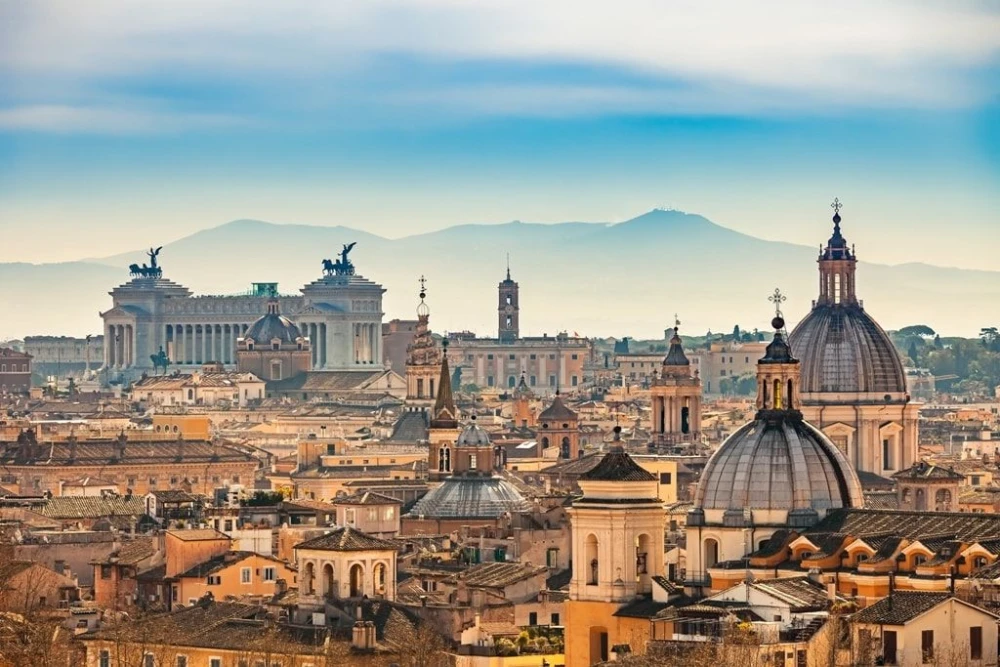
Our gateway to the Eternal City, Civitavecchia has served as Rome's seaport since the 13th century, boasting a long and venerable history. Its location near the modern city, made it a perfect vacation resort for emperor Trajan, who built a pleasure villa. while Bernini and Michelangelo designed the harbor fortifications. Yet the Eternal City, the ancient capital of the Western World and the center of Christianity for nearly 2.000 years, is our main reason to be here. YYou can visit the ruins of the Forum and the Colosseum, throw a coin in Fontana di Trevi to make sure you return to Rome one day, take a photo in front of the Vatican, view the splendors of the Sistine Chapel or climb the Spanish Steps, once the heart of Rome's Bohemian Quarter and enjoy a delicious gelato, in the glamorous area.

Palermo, capital of Sicily, is situated right by the Gulf of Palermo in the Tyrrhenian Sea. Traces of Roman, Arab and Norman influences mix here, in a city that is over 2.700 years old. The highlights of Palermo, which is noted for its history, culture, architecture and gastronomy, are Palazzo dei Normanni, one of the most beautiful Italian palaces and a notable example of Norman architecture with its golden Byzantine mosaics, the Cathedral with the heliometer (solar "observatory") of 1690, Santa Maria dell'Ammiraglio (St Mary of the Admiral), San Giovanni degli Eremiti (12th century), Palazzo Abatellis with the Regional Gallery, the Regional
Archeological Museum Antonio Salinas, the neoclassic Teatro Massimo ("Greatest Theatre",1897) and many
small piazzas that depict the city's historic past.
One of Spain's Balearic Islands, Ibiza lies about 50 miles off the coast of Spain. Over the course of its history, it has been claimed by the Phoenicians, Romans, Vandals, Byzantines, Moors, Greeks and Carthagenians. Today's cruise visitors come for the vibrant nightlife at the ever so famous night clubs, for the sunny beaches, the clear waters and a little historical flavor. The fortified upper section of Ibiza Town depicts Renaissance architecture and has earned it recognition as a UNESCO World Heritage Site.
Since its founding as a Roman colony in 138 B.C., the Visigoths, the Moors, the Catalan and Aragonese and the modern tomato-throwers have thrived on the shores of the Mediterranean at the Gulf of Valencia. Valencia is a mix of the old and the new. The historic past is depicted in the stone geometry of the Valencia Cathedral, the mediaeval gates of the Serrano and Quart towers, or the Tribunal de las Aguas (Water Court) and one of the most iconic examples of Gothic architecture in Europe, the Lonja de la Seda, declared an Intangible Cultural Heritage site by UNESCO. The new facet is embodied in the arching white steel of the futuristic City of Arts and Sciences, designed by Valencian architect Santiago Calatrava.